Singapore’s strategic geographical location and position as a global financial hub
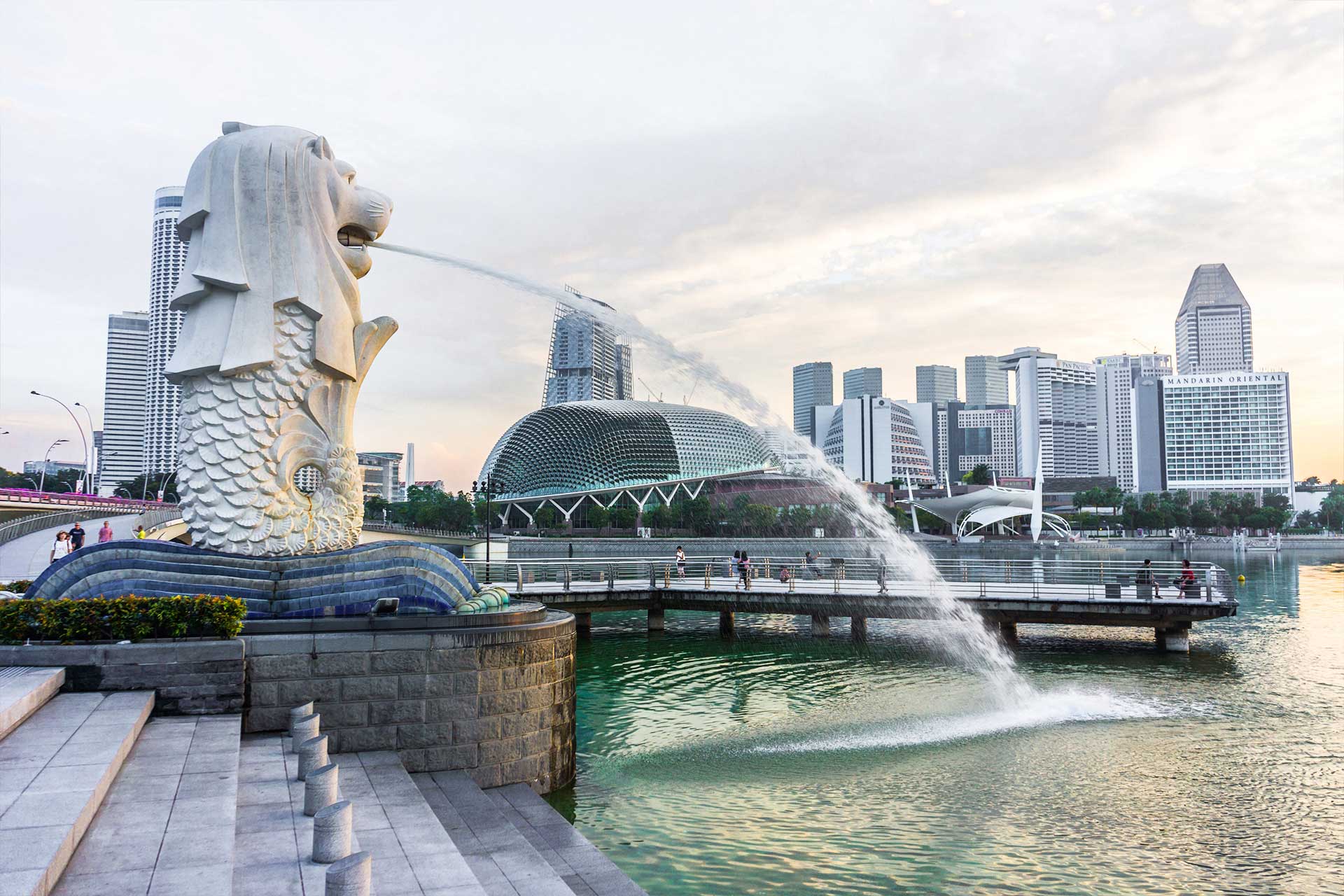
Singapore is turning 50 this August. The country has never been better positioned for the future since its independence. Singapore is strategically situated in the heart of the emerging Southeast Asia. With the ASEAN Economic Community (AEC) slated for kick-off at the end of this year, Singapore is set to grow even further by leveraging on its position as the world-class logistics hub, global financial centre and ideal location for global companies to setup their Asia headquarters.
An ideal geographical location
Located at the nexus of major shipping lanes, Singapore is an essential logistics hub and conduit for world trade. The World Bank ranked the country as the No. 1 Logistics Hub in Asia in the 2014 Logistics Performance Index. The city-state is a prime location for major logistics firms, with 20 of the top 25 global logistics players conducts their operations there. Changi Airport is one of Asia’s largest cargo airports and is served by over 6,500 weekly flights connecting to 280 cities in 60 countries, handling close to 2 million tons of cargo annually. Singapore is the world’s busiest trans-shipment hub, handling about one-seventh of the world’s container trans-shipment throughput or 31.24 million TEUs of containers in 2013. The country is connected by 200 shipping lines to 600 ports in 123 countries, with daily sailings to every major port of call in the world. Singapore offers streamlined security regulations and operational procedures to help businesses cope with the adoption of many international customs and security programs. The city-state has highly efficient customs and business- friendly import and export procedures providing companies greater efficiencies in obtaining clearance and permits for their goods.
A financial hub
Singapore is also a well-established premier financial hub in Asia. Over 1,000 financial institutions are operating in the country to take full advantage of the socio-politically stable environment and robust economic fundamentals. The banking and financial sector employs 190,000 people, contributing 12% to the GDP.
The Singapore International Monetary Exchange (SIMEX) is Asia’s first financial futures exchange. The country is a premier wealth management centre with over US$1.8 trillion assets under management in 2013 thus making it the fastest growing wealth management centre in the world.
Singapore has built an outstanding network of international agreements that further enhances its attractiveness for investment holding and makes the island-state the logical choice for trade and investment in Asia.
The 74 Avoidance of Double Taxation Agreement (DTAs) serve to prevent double taxation of income earned in one country by a resident of the other country. The 41 Investment Guarantee Agreement (IGAs) are designed to promote greater investment flows between Singapore and the other country, and the 21 Free Trade Agreements (FTAs) and Economic Partnership Agreements (EPAs) are superhighways that connect the city-state to major economies and new markets.
The country’s emphasis on developing activities along the innovation value chain is consistent with the new principles being developed under the OECD’s Base Erosion and Profit Shifting (BEPS) project. Singapore is a highly suitable location for multinationals reviewing their IP strategies in light of the new international tax framework being developed under BEPS. Companies in city-state also benefit from the country’s Group Relief system for loss transfer. The scheme permits transfer of current year not utilized losses, donations, and unabsorbed capital allowances within group companies.
Singapore’s sound legal infrastructure and innovation-friendly policies that make the country one of the most competitive economies in the world.
In the last five decades, Singapore has been through an amazing journey that witnessed its transformation from a British colonial outpost to a world-class economic powerhouse.
Today, the country remains as one of the most competitive economies in the world. In 2014, it received US$81bn (27% increase from 2013) of FDI inflows making it the fourth most invested country in the world (only behind China, Hong Kong and USA). Its solid legal framework, efficient judicial system and innovation-conducive policies will continue to give it a built-in advantage in attracting foreign direct investment (FDI).
A stable legal environment
Singapore is a world-class dispute resolution hub that allows companies to benefit from the protection offered by its excellent (and corruption-free) judicial expertise. The Singapore International Commercial Court (SICC) has specialist jurists from many nations hearing international commercial disputes, i.e. cases governed by foreign law where the parties involved have agreed to use the SICC. SICC even allows foreign lawyers to represent their clients in SICC hearings and appeals. The country is one of the top seats for arbitration globally and is ranked alongside traditional places like London and Zurich.
The city-state’s arbitration laws are user-friendly and its judiciary is renowned for its pro-arbitration and pro-enforcement stance. The Singapore International Arbitration Centre (SIAC) is one of the world’s leading and Asia’s top arbitration institution. Singapore arbitration awards are enforceable in over 150 countries worldwide as it is party to the 1958 New York Convention on enforcement of arbitration awards.
There are no restrictions on foreign lawyers or law firms from representing their clients in arbitration proceedings in Singapore. The Singapore International Mediation Centre (SIMC) provides best-in-class mediation services and products targeted at the needs of parties in cross-border commercial disputes, particularly those based in Asia. Maxwell Chambers, centrally located in the heart of Singapore’s business district, is the world’s premier and first integrated dispute resolution complex housing both best-of-class hearing facilities as well as top international (Alternative Dispute Resolution) ADR institutions.
A safe place for intellectual property
The country has the ambition to become a global intellectual property (IP) hub, thanks to its protective legal framework and extensive tax treaty, free trade and investment guarantee agreement networks. Singapore’s legal framework for IP protection already is well recognized internationally. A large number of companies across a range of sectors have located their research & development and IP related work in Singapore. In the 2013-2014 Global Competitiveness Report, the World Economic Forum rated Singapore as having the best IP protection regime in Asia.
Many of Singapore’s tax treaties specify withholding tax rates on royalties as low as 0 or 5%. Where there is no tax treaty (such as with the US), Singapore provides a unilateral tax credit for foreign taxes suffered on IP income. Tax incentives are available under the Development and Expansion Incentive to provide reduced tax rates on IP income for a period of 5 years or more.
Eligible IP income may be received in the form of royalties or licensing income, or it may be income from operating a wider set of activities as a Singapore principal. Companies in the city-state are offered generous incentives to register their IP. For the acquisition of certain IP, companies are entitled to write down the acquisition costs over five years of assessment, subject to certain conditions.